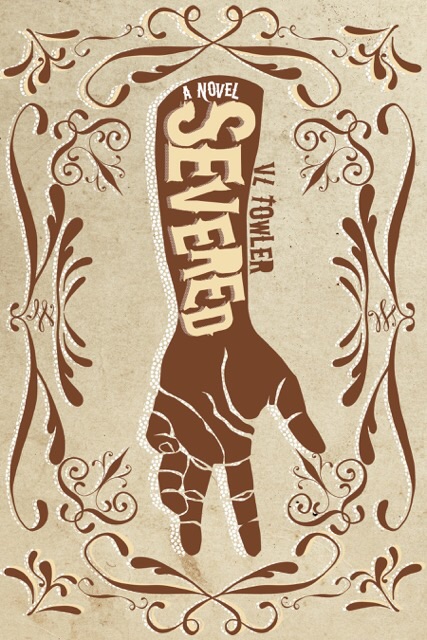
I'm excited to share my sample book covers (still in draft form), designed by Gail Anderson www.gailycurl.com
Thursday, July 23, 2015
Friday, May 22, 2015
Five Lessons My Editor Taught Me About Writing (and Why My Life Is Not Wasted Waiting So Long to Learn Them).
I set out to write my soon-to-be published novel over 13 years ago when I moved to New England after my mother's second husband passed away. With no income to speak of, and no friends, I aimed to write a novel after my foray into screen and television writing in California (where I grew up) foundered. Don't get me wrong. I've had a great career in movies, television, and even an off Broadway play--just none of it is attributed to me, although my fingerprints are everywhere, even on television series that you are watching today.But the Play button must be pushed. Life goes on.
I met my editor, Phyllis, before I knew that I would be using her as an editor. She had written a large cover-article in the Portsmouth Herald about the writing duo my mother and I had become after I realized that we could fill a big void in the area by helping people with their resumes. New England is expensive and the majority of jobs are low-wage. Most can't afford to pay $400 for a resume, so we provide an alternative. Phyllis did such a wonderful job that she restored my faith in journalism. Everything was written well. The only problem? The Portsmouth Herald didn't put the information of where people could contact us! It wasn't Phyllis's fault and she felt terrible about it. But I was still grateful for her work then, for reasons I'm sharing now.
The Black community here has known for some time that I have been writing this novel; and when I was invited to speak about my process, Phyllis was there, listening intently. I was grateful she took the time to attend. I was not a keynote speaker, mind you, as there were more illustrious, accomplished writers who had more to say than I. After I had read an excerpt, Phyllis approached me, lauding the visuals of the scene that I had written. That was great news for me; I was buoyed by her comments, she being a legitimate writer, in my eyes.
Years earlier, I had finished my novel, when it was much longer and not as "finished," but had an offer from a publisher to publish it--without his having even finished reading it. I could be on my 8th novel by now, of course. Maybe it was my low self-esteem, but I didn't trust that the novel was ready, and declined. That publisher has since moved on to greener pastures. Still, I was right in my decision.
I needed someone who could help me make the novel better.
I wanted to publish something about which I can be proud, and just speaking the Queen's English wasn't enough. I know that I sound fairly educated when I write, but that wasn't my goal. I wanted to tell a story: an intricate story with layers, about real personalities that we all know exist--not stereotypes, especially when it came to my Black protagonist, Dr. Lula Logan. When another esteemed critic gave me feedback about my novel's shortcomings in 2007, I went back to the drawing board and "re-thunk" everything. I returned to Phyllis when I thought I was ready, and asked her, last year, to edit my novel. And this is what she taught me:
1. Recording what you see is not writing.
I am visual. When my characters speak to me, I see them. I see their gestures, like a camera closes in on a subject in a film. I had verbatim descriptions of what my characters were doing. If someone picked up a glass, I explained how they did it, when they sipped, and how they set it down again. If they refilled the glass, I talked about how they did it. Mind you, there was likely a conversation going on during the pantomime of action, but the description of the visuals tended to get in the way of the story.
2. Just because the sentence is written doesn't mean it's the final sentence.
Because I write what I see, I didn't realize that, notwithstanding putting ink on paper, I still wasn't writing. My sentences were complete, but still very "incomplete," because I was being too graphic. Sometimes the reader needs a more holistic view of what the writer is trying to say. For me, I never detached myself from what I had written to actually study the sentence--to make it better. The only time I did that kind of introspection was while writing descriptions.
3. Narration by itself is useless if it doesn't advance the story.
The most humbling part of my editing experience was realizing that one paragraph that I had spent hours crafting would end up on the cutting-room floor because it didn't advance the story. My story is about rural America, whose pace is necessarily slower than that of the big city. I live in a rural state, so I know of what I speak. There is much beauty to living in a rural area, one being that one can take more time to appreciate the bucolic atmosphere that it affords--but it can be incongruent when you're trying to build suspense. So, gone are the paragraphs describing the countryside that I spent time in Louisiana studying to lend authenticity to my novel. That part hurt the most, I believe. But when I took out those paragraphs that she crossed out in pencil, I had to admit that the story moved more quickly. When writing suspense, the author wants to create anticipation, not wanting the reader to skip whole pages in order to cut to the chase.
4. Using too many adjectives mitigates what you're trying to achieve.
"Hot and muggy". "Ecstatic and jubilated". These aren't phrases I actually used, but you get the point. One must have confidence in one's language. By using more than one adjective to describe an object, what I was actually showing was indecision. Own your words. Just choose them wisely. Again, I was seeing, not thinking. Now, I will ponder which word to use, using more introspection than just throwing a word out there that describes what I see.
5. Too many points of view spoil the story.
I'm cinematic. I tend to show and tell. But as an author, I tended to not only show and tell, but I would give you some insights into the characters' thoughts That's not a problem if you have a few characters. But, as Phyllis commented, my novel rivals "Gone with the Wind" in its plethora of personalities. This might be the problem of having listened to the one critic who told me that I needed more back story for my characters, and, being the literal person that I am, by golly, I did that. Showing the points of view of every person can get crowded. We can't read the minds of every person we encounter, so I learned that I have to be more careful about entering the minds of every peripheral character in the story.
It will take me another month or two to finish this novel, because I still have some thinking to do. Phyllis cautioned me that some characters have too much screen time, as it were, and I have to figure out what to do about that without sacrificing the plot. I'm trying to weave characters together who have nearly incestuous relationships, in a rural town where lives constantly intersect. In small towns, that's what happens, and I can attest to it, over and over again.Just recently, I attended my squash "daughter," Ellie Hayes,' graduation (UNH) dinner and was leaving early to return to my editing. While saying my goodbyes, I realized that I had met the woman at the other end of the table, as we had played squash together in Portland, Maine. Her husband was the man sitting next to me at the dinner table. Again, coincidentally, he was becoming a Unitarian Universalist the next day (I am Unitarian), at a church whose pastor had visited our Fellowship in New Hampshire a year or two ago, and who had given the most thoughtful and beautiful speech I had ever heard, which had reduced me to quiet tears. It's a small world. It's that world that I wanted to write about, albeit removed in place--for me--to Louisiana, instead of New Hampshire (In the first draft of my novel, New Hampshire did figure prominently, but I followed the advice of someone who told me to keep the mystery in one locale).
Phyllis' novel, Snow Fence Road, about small town life in coastal Maine, convinced me that she had the chops to tackle my subject. Apparently, my novel is quite a bit more complex than hers, however, and she admitted that it was a challenge to edit it. Based upon what I've learned from her edits, not only was she up to the task, but she taught me how never again make another editor go through the pains she so willingly undertook on my behalf. This novel will have a sequel, but thanks to Phyllis, it won't take years to write it.
Saturday, May 2, 2015
The Caste of Characters in My Novel Set in Rural America.
![]() |
| The canopy of trees also covers a diversity of wealth in rural America. |
As a writer from the lower middle class, who has only peeked around the corner to catch glimpses of wealth, I do not wish to put wealth on a pedestal. In my novel, "Severed," I don't drop too many designer names and I purposefully stay away from the bling-bling trappings of so many contemporary American novelists, who place wealth as the real protagonist. However, the concept of wealth is a very important subtext to the novel. The lengths that people go through to become wealthy forms part of the mystery.
Set in a rural pocket of Northwestern Louisiana, Nakadee is a university town with a population of under 40,000. Luscious in its comparison to swampy, crowded New Orleans and its northern neighbor, a complacently citified Shreveport, Nakadee is a fictional sleepy hollow that is likely to grow in leaps and bounds given a potential natural gas pipeline construction project which will change its economy. Some Nakadee residents can't wait, while others don't care: the rich will only get richer, however, the lower classes might get some good jobs, for a change.
![]() |
| Even rural roads lead to power |
Growing up, Lula lived on the periphery of the Black social circles of debutante balls and elite Black social clubs. Not prone to class-isms or people-pleasing, she is more intellectual than social. While no stranger to the good life, she knows she has to pay for it herself, so when the investigation in which she becomes involved relates to several wealthy individuals, she's intrigued by what she witnesses, and must, herself, decide whether she has any biases against the people she comes across as part of the investigation.
Mind you, the wealthy she's dealing with are not the nouveaux riches Kimyes and Jay-Zs of the world who sing about their acquisitions, but old money and old power, whose wealth is very much unseen, and more hidden in their closed door Congressional offices. Lula must come to terms with her professed values and her feelings, which are muddled after meeting Congressman Girabeaux.
A Black Republican who is from a family of freeman who owned slaves in the antebellum South; the other, an older, more traditional White Congressman whose patted enough backs and greased enough palms to place him next to the highest players in Hollywood, his constituency. Though they are rich, they are only bit players in a grand scheme. In fact, they are hired guns of the real power brokers of the uber wealthy--twelve degrees, instead of six degrees of separation. But they know that to stay in power they must do someone else's bidding, even if they never meet the person whose interests they represent.
When Lula meets the Black Congressman, despite her progressive politics, she finds herself falling under his spell. Is it the limousine driver or his personal chef that makes him so appealing? And what does she truly feel about her ex-boyfriend, a Creole detective, the only one of color on the police force, who is comfortable with his place in town, but who, to Lula, manages to always play it safe?
In the U.S., we witness the lives of the rich and famous on television. But how do you handle it when you see it up close and personal? The cast of characters in the novel is large, and wide, intentionally so; any small town has its own variety. In this investigation, however, when severed fingers start to appear in different parts of the small town, Lula comes across some of the town's characters beneath the surface of notoriety, but characters just the same.
The South is one big caste system through which Lula must negotiate. Although never on the surface, her beliefs about race are a major factor in her own metamorphosis as she comes to terms with her new home in Nakadee, Louisiana.
Sunday, April 19, 2015
I Used to Like the Police--Until I Stopped Working For Them
The television show Girl From Uncle, one of America's first female law enforcement protagonists, was the bomb when I was growing up. Stephanie Powers was the coolest woman on the planet, as far as I was concerned. I remember pretending to have a Walkie-Talkie (sounds funny, now, doesn't it, given smart phones), talking loud enough so my colleague, Donald, another kid with a vivid imagination, could hear me through his own device around the corners of the neighborhood houses where we'd hide out, going after our invisible prey. I'm not sure what we held in our hands. It wasn't Walkie-Talkies. It might have been cardboard candy boxes. Who knows. Back then in 1966, my family and I were living on 41st Street, close to downtown L.A., where, one evening, I sat outside on my grandparents' porch with my friend, watching the flames from a local riot nearby light up the sky a deep orange. I didn't know what was going on. Apparently, it was a left-over remnant of the Watts riots, a release of pent-up anger of the infamous mostly White police control over a poor Black community.
My family hailed from a college town in Ohio, a bastion of interracial marriage and co-ed education, and were thrust into an all Black environment, something quite alien to the six of us kids. Our new peers in L.A., thought we were from England because of our mid-Western accents, and we found them to be a rowdy for our Northerner bookworm tastes. But I knew to love my black brethren, because we were all living under a yoke none of us asked for.
For many years I did play de facto real life "detective" as an attorney for the federal government, where I learned close hand how law enforcement works. Or doesn't work. I left when I realized that I was feeding into a system that was propagated to pursue only the most vulnerable, not the most criminal. Drug dealers were being set-up for capture while corporations were getting away with untold criminal acts; monied interests were untouchables, their schemes too difficult to comprehend. So, I took an interest in white collar crime cases. Ironically, notwithstanding my biases against the rich and infamous, my work led me to assist in prosecuting Africans, which I felt duty-bound and compelled to do because Americans were being bilked out of millions of dollars.
I had become the go-to person for handling international inquiries concerning Nigerian organized white collar crimes. I had created a task force among federal government agencies to tackle those letters from Nigeria--you know--the ones from "Prince Okoye," inviting the recipient to provide bank account numbers and permissions to deposit alleged millions into the lucky American [sucker's] bank accounts. Those letters were called "419" in Nigeria, and advance fee fraud here in the U.S. From rocket scientists to retirees, the American victims' love of money caused them to conspire with faceless Nigerians with the smarts to know Americans' obsession with being rich.
My work had garnered me an Atlantic Fellowship in Public Policy, an appointment by United States Attorney General Janet Reno, which allowed me to live in the UK for a year. My thinking was that by isolating Nigerians from other Blacks in the diaspora, law enforcement would learn how to distinguish them from other Blacks, instead of painting all of us with the same brush stroke. It was a burden for all Blacks to be responsible for every other Black persons crimes, because the only definition of a suspect might be that s/he was "Black."
Publicity wasn't stemming the tide of Americans who were "corralled" by the Nigerian scammers. When I suggested that prosecutions of Americans for being co-conspirators (aligning themselves with individuals who were conspiring to secret money away from coffers in Nigeria to the U.S.) would be a good deterrent, that fell on deaf ears. The inference in the push-back was that law enforcement did not want to have to prosecute White people.
Criminals were criminals, I thought.
Not in America.
Criminals are Black, in America. We are drug dealers, thieves and sexual predators, a perception drilled into the American conscience by Hollywood. Are Blacks innocent of all those negative labels? No more so than any other group or nationality. But, like cowboys on horseback killing Indians, back in the day (well, centuries ago), going after Black people is today's bloodsport; only the horsepower is an automobile.
The people in law enforcement with whom I worked were good people, overall. They carried out their duties diligently. They believed in their mission. I was never treated with any disrespect. In fact, I was feted by the government agencies with whom I worked.
The problem with American law enforcement is that those tasked with investigating and nabbing criminals are trained to do only that. They are not trained in the bigger picture history, or in other techniques and methods--only those missions championed by their own. They are like guard dogs whose job is to find the culprit, and are rewarded with a dog biscuit in the end: a bonus, a promotion.
When I worked with Scotland Yard, I was impressed with their level of investigatory research. They knew they were dealing with people, and they sought to learn who those people were. Their charts and graphs of operations were truly phenomenal (before computer technology could create sophisticated graphs). I can't say the same for law enforcement in the U.S, because I was an attorney, as opposed to an agent, so I wasn't one of them, and never learned their operational tactics and techniques. But the Secret Service agents were eager to learn from Scotland Yard, and we traveled there and Nigeria. One White agent, Tom Johnston, was exceptionally engaged in understanding Nigerian crime and, eventually, used my policy paper for a class he taught at a local college in Georgia. He had a heart attack after returning to the US on a family emergency, after traveling on assignment in Nigeria to work closely with Nigerian police.
Mind you, I worked for federal law enforcement, which has a more amorphous mandate than going after bad guys on the street. The agents I worked with all had college degrees, as was required for the types of cases they were investigating. My focus was white collar crime, sophisticated crimes by highly intelligent and charismatic suspects who, under the guise of business, would take your home from under you (sound familiar?). That Nigerians were as sophisticated as the average American businessman was a real quandary for law enforcement, and they didn't know what to do about it. This was before the terrorist attacks when America was still innocent, gullible, and without much knowledge of international crime except for the Mafia and Mexican drug lords.
When I asked for and was denied leave without pay to finish my report, after seeking three additional months to complete my assignment, I left the government and completed it. I believed my research was more important to the British and U.S. government than my being employed. I had several recommendations that I offered, but know not which, if any, were implemented. The essence of my paper was that the whole world shows acts of criminality; we must come to grips with our own criminal pasts before we accuse another people of being perpetrators.
Since leaving law enforcement in the late 1990s and witnessing what's happened to the world post-2001, when the World Trade Center towers were struck down, I'm at a loss to explain what has happened to our country. The attack on New York has had an indelible blow to the greatness of our crime-fighting apparatus. Instead of preventing the occurrence of the attacks, we unleashed our angry bulldogs on the world, suspicious of anyone who is foreign-looking, foreign-sounding, and non-Christian. The militarization of our police, untrained in warfare, but given the powerful tools to wage it, has created a police state in our own country that has made Americans afraid of those sworn to protect. This professor's compelling essay explores the phenomenon of private funding of police as a new development in explaining our current problems.
And given the rash of news of minorities under siege, it would appear that our own police have taken sides and believe that we Blacks are the terrorists among us. So the local police are the new investigators of all things suspicious. Forget that this weekend is the anniversary of the Oklahoma City bombing, where a White terrorist killed Americans on our soil -- it is still the brown-skinned who have scarred the American psyche.
I am neither male nor White, but I know that for centuries, they have grown up believing they are the good guys. This facile explanation of American crime-fighting, "good guys versus bad guys" is also a problem. When people are reduced to those descriptions, there are bound to be consequences. What happens when the prosecutors are the bad guys? What happens when the police or agents are the criminals who, until the advent of the smart phone, have gotten away with it and live their lives among us as upright citizens?
![]() |
Official NRA Police Target |
This country has always hunted Black Americans, as slaves, and not only in the South:
[A] legally sanctioned law enforcement system existed in America before the Civil War for the express purpose of controlling the slave population and protecting the interests of slave owners. The similarities between the slave patrols and modern American policing are too salient to dismiss or ignore. Hence, the slave patrol should be considered a forerunner of modern American law enforcement.http://plsonline.eku.edu/insidelook/brief-history-slavery-and-origins-american-policing
The moral of the story is that there is no race immune to criminality. But for Blacks in America, we all hope to not be stopped by the police. It is easy to see how a Black man's instinct would be to run, because chances are he will be beaten, shot or strangled to death--while handcuffed.
Better to die a free man than in custody.
This link is not necessarily an endorsement, but definitely gives us food for thought: http://www.thrivemovement.com/our-justice-system-fails-protect-your-rights
Thursday, February 26, 2015
Yes, Mr. Giuliani, Our President Does Not Love "Your" America. And Why I Love This President.
![]() |
| How DID you grow up, Mr. Mayor? |
What is apparent to me, in Mr. Giuliani's comments, is that it is he - Giuliani - who does not like America. America's once Mayor,does not like what America has become, and is chastising the President for not reveling in its halcyon post World War II past, one that he and his Republican cohorts still cherish. Giuliani's claims that Barack Hussein Obama didn't "grow up" like most Americans somehow makes the President seem other than ... can he say the same to the millions of other immigrants who did not grow up in America? Are they any less American?
According to Giuliani: yes.
According to Giuliani, there's only one way to grow up in America.
![]() |
| America Accepts Everyone, Mr. Giuliani. Even You. |
What a difference four decades makes. Now, Giuliani would have you believing he was part of the White Anglo-Saxon Ozzie and Harriet family.
What does Mr. Giuliani say to the children of parents in our Armed Forces and our diplomatic missions who live in secluded American communities, going to American schools in foreign countries? Are they not American? What does Mr. Giuliani say to the Japanese gardeners populating California in the 1940s and '50s, who tended people's gardens and lawns, but whose children grew up speaking fluent English--yet were put in concentration camps in the USA? Were they not Americans, too?
Oh, right. They were Americans.
Just the wrong Americans.
Was Elvis Presley an American, growing up singing and gyrating his hips like a Black man?
What was America before the African slaves brought watermelon, yams, okra, and any number of "foreign" foods to the American natives' shores?
What does it mean when an Indian woman wears a sari, or a Muslim woman wears a hijab? Does that make them any less American? When Catholic women wore scarves on their heads when attending mass, were they less American?
What does it mean to "grow up like us?" Mr. Giuliani thinks it means living in a community whose only foreign food was Chinese take-out and whose only foreign language knowledge was the words "Adios muchacho." That was fifty years ago. And Giuliani and his ilk want all of us to go back there.
The Giuliani faction of the Republican party is like overweight men who still talk about their high- school touchdowns as if they were yesterday. We all grow old. And America will always change.
This President understands that.
Barack Hussein Obama, in name alone, is a bridge from the past to the future. He knows that his Presidency is a harbinger of a real recognition that the storytellers have not scribed: this country belongs to no one and everyone. We are learning that being American is a state of mind, and those minds can beg to differ about what it means to be an American. And that's why a faction of the Republican party does not like this President. And the very reason why I love him.
Mr. Giuliani is upset. That he isn't Presidential material, and that his own greatness as America's Mayor has been eclipsed by a two-term President who speaks and communicates to the world with respect and equality, not the superior might that White means right.
And where are the voices of Italian Americans who could silence Giuliani?
Quiet.
They are exercising the privilege of being White now, something this half-White President cannot do.
Shame on Giuliani.
Sunday, February 8, 2015
Warning: Being Famous Can Kill You.
![]() |
| Drug overdose (?) |
My heart has been heavy for the past week. Famed singer Whitney Houston's daughter, Bobbi Kristina Brown, may die in the next couple of days, perhaps on February 11, 2015, the three year anniversary of her mother's death. I hope that I am proven wrong about this, so I'm perfectly fine if it turns out to be the case. And tonight, the Grammy's will be televised, feting the musical accomplishments of some of America's most popular singers. You will note that I did not say, "talented." I believe that term has been lost in translation, nowadays, as it is personalities that become celebrities, not artists, necessarily.
![]() |
| No need to explain this one. |
Clive Davis, the mogul who has created mega-stars, throws a Gala, every Grammy night, anticipating his artists' big wins before the Grammys airs on television. In fact, he was partying in the hotel in 2012 year when his top-grossing singer was lying in a bathtub, dying of a drug overdose, upstairs. Alone. A victim of his genius. And treachery. He is a poster boy for so many other "maestros," handlers (managers, agents, posses, handlers, hangers-on, and sheer leeches) of talent, who breed and nurture fame, like a plant, but then let it go wild and choke itself with too much sycophantic, and ultimately, murderous adoration. Anyone who can shepherd the talent of a young, raw, street-talking songstress into the epitome of American beauty, grace, and talent should also know the heart of his client, know of her troubles, her weaknesses, and nurse her to mental health with the same acuity and adroitness with which he nursed her talent as a singer. And let us not forget those bereaved who eulogized her at her memorial service. They were actually lamenting their own scarlet letter A, not for adulterer, but for being "At Fault," for using the carcass, eating it alive, siphoning away the money and life joys from artists too disturbed by drugs and fame to know what was happening to them.
Adulation is the ultimate orgasm, nowadays. And the problem is that we have chosen fame as a career goal, without the job title that goes with it. It is enough to "party like a rock star." I wonder if any of our dead stars would want their anonymity back, to be alive and on Earth now.
![]() |
| Natalie Wood - drowned at a drunken yacht party |
Fame is our crack cocaine. The human ego has reached gargantuan solipsistic navel-gazing to a degree that even the famous can't get enough of themselves. I recall my stupefaction learning that when he was younger, even Prince William, already a teenage heartthrob and legendary heir to the Windsor throne professed his desire to be...an actor.
Let that sink in.
![]() |
| River Phoenix -- drug overdose |
This then-boy, likely already the most famous "son" in Western civilization,
whose mother, Princess Diana, Duchess of Wales, died a horrible death from being hounded by paparazzi,
could not get enough adulation for being born to a rich family who
crowned themselves rulers of the Western hemisphere. He wanted more. And when he visited the United States, his blushing wife, in tow, where did he go? To meet legendary Jay-Z and his wife, Beyonce, American icons: the swashbuckling, hip-gyrating, songstress-rapping storytelling duo that has whipped the world into a frenzy of adulation so much so that old moneyed uber super stars want to be aligned with them to secure the street cred to "rule" the future Britannia even better.I haven't touched on the infamous famous, like Monica Lewinsky, who is a household name because she performed fellatio on the President of the United States. Having accomplished this Herculean feat, she is now qualified to write articles for Vanity Fair, sitting among a pantheon of meritorious writers.
It is not the love of money that is the root of all evil. It is the love of fame that is evil. It is a cancer that has infected our world and it will only get worse, as the masses continue to be fed stories of "rags-to-riches" triumph that inevitably crash and burn in a drug-addicted death, a dangerous driving accident, or a tragic life of looking everywhere for love, not realizing that loving yourself is the best admiration to which one could ever hope to aspire.
I have shied away from idolizing any living person except my grandmother, when she was alive, and my mother, who lives and breathes--yet, she, too is only human. We can all cast our gaze and applaud the feats of hard-working individuals who have climbed from anonymity to be known to the world. But don't get it twisted. For those who seek only fame, it comes at a price.
![]() |
| Michael Jackson, Drug overdose |
Bobbi Kristina is paying for it, as are Michael Jackson's children. And our nation is paying for it, too, while we spend hours reading the gossip sheets and internet sites, reveling in our celebrities' latest perils, instead of helping each other solve our own. Our nation is on the verge of a nervous breakdown, addicted to being everyone but our individual selves. We are in a perennial state of youth, where nobody grows old, and everybody is consumed with consuming like a rock star.
Whitney Houston's death, and her daughter's impending one, should remind us all of the price we pay for fame that no one is accustomed to handling without special assistance. We would all do better to wish for a long life of happiness, creativity, self-improvement, an income in which to live comfortably, and the love of family and friends.
Grow up...and old, America. It's better than dying young. And famous for dying so young.
Sunday, January 18, 2015
My Cautionary Tale [or Ten Questions to Ask a Prospective Agent].
![]() |
| Agents with an Ulterior Motive. |
When I decided to leave the security of my employment as an attorney, in Washington, D.C., I took a vow of poverty. After doing my Peace Corps stint in the Philippines on an island village where there was no running water or electricity, I understood that living well is a relative term. My older sister and her doting husband let me live in their home in the South Bay area of Los Angeles so that I could pursue a television writing career. My belongings were in storage in DC, still, but I had my hybrid bicycle, clothes, and a nice comfy bed, and virtual hegemony over their home office while they worked. In exchange for their largesse, all I had to do was wash dishes, and run errands for them. I had my computer, that I had bought from a Writers Guild of America East Foundation screenwriting competition that had garnered me $4000 many years earlier. Mind you, I wasn't the only winner. There were 11 of us. Although we were supposed to receive an established screenwriting mentor to assist us in our screenwriting pursuits, mine never materialized. But I was busy as an attorney then, and had developed an interest in making my own film. But I digress.
While in Los Angeles, I wrote a spec script for a television series, and a television pilot named, "CON LAW," a proposed series about new law school students matriculating at the same time one of their professors is killed.
Over a decade later, after moving to New Hampshire, I would receive a notice in the mail that I was potentially a member of a class of writers who had been discriminated against by the industry, meaning, "Hollywood," as, apparently, I was an older writer who had been thrown in the dustbin with other more successful writers. Considering that my attempts to enter the industry were unsuccessful, I was flummoxed as to how I could even belong to the class of writers. I was not successful, so how could I be getting the letter? Then it dawned on me.
I had an agent. Once.
How could I forget that I had an agent? I couldn't even remember the agency's name. I had to look up my records to be reminded that I had signed a contract to potentially write for a very popular television series dealing with Washington, D.C., where I had hailed for 11 years as an international criminal attorney for the US government. The contract was for one already successful television series. The agency didn't plan to represent me for any other potential writing gig. When I called the Writers Guild of America, West, the union for writers, to ask them about how usual that practice was for one to be represented for one show only, they said that they had never heard of such a thing. The literary agency that sought to represent me for the one project was a boutique agency with lots of established writers, but no big names from what I could gather (although, truth be told, I was interested in #screenwriting, not literature, so most writers' names would fall on my deaf ears). I would place this agency in the second or third tier of literary agencies; but they had nice offices, and seemed quite legitimate. And, apparently, the agency was one of the defendants, among others in the lawsuit. Mind you, some of those plaintiffs were already established writers, whose sell-by date had passed. It's no secret that Hollywood wants nubile, impregnable youth, not seasoned adults running around a set, hence the colossal lawsuit by the elder statesmen #writers, to which I haphazardly belonged because I had an agent for all of -- not even six months.
![]() |
| Fanfare for the Uncommon Agent, Jerry Maguire |
Welcome to the whoring world of agents. I don't know anyone besides the football player in Jerry Maguire who had a good relationship with one (and, well, you know how truthful that is).
Never in the annals of moneymaking has there been a more bloodsucking species of human being than a Hollywood agent or manager. They manage the careers of people who do all the work, have all the talent, but who are indebted to the agent--for doing what? Talking about them in passing with their friends. Because that's all that happens. Most agents are struggling to be seen, or have their calls returned by anyone; and more often than not, they are more interested in establishing relationships with "Hollywood" or the publishing houses, themselves, than helping you, an upstart, to get your foot in the door. Two other literary agents whom I approached (about this blog posts novel, yet to reach Amazon virtual shelves), one in NYC--who asked for my work, the other, in the UK to whom I sent my novel's synopsis--gave my work to already established writers, to review, who, rejecting my work, instead incorporated it into their own. You can purchase their versions of my novel on shelves to this day.
I know there are people who swear that their agents are a godsend. However, everyone I know seems to get their work on their own, and they do all the hustling to be known, to create a buzz, to get attention. Think about it: agents have many clients, not just one, so how can you expect them to be singing your praises at all times? And then you pay them 15%? For me that's like charging the New England Patriots a fee for liking them. I know that some agents do much more. But, for the life of me, most people that I know bemoan the difficulties of getting their agent to pay any attention to them, or they chafe when an agent says that s/he was responsible for getting the agent a gig--that the client had told them about.
Agents usually want you when you're famous and a known commodity who, unequivocally, can add income to their wallet because you've earned the money already. So, think twice about signing on the dotted line to give away your hard-earned money to somebody who merely "likes you" because they think you have promise (at making money on your own that you can then give to them). If you are going to look for an agent, ask your prospect or consider the following questions:
![]() |
| You'll Have a Devil of a Time finding a Good Agent |
2. Ask for a look at the telephone directory on their smartphone or tablet. If there aren't hundreds of names in it, don't use that agent. You want an agent with contacts.
3. Name 10 people whom you know (not just that you've met) who are influential in your field.
4. Who won't return your phone calls? If they can't list names, run for the hills. They are lying.
5. What role does social media play in your life as an agent? Is s/he a dinosaur, or contemporary?
6. How does the agent dress? Is s/he stylish, or frumpy, with bread crumbs all over her clothing? Is his tie stained?
7. Does the agent have an opinion about any other agencies that s/he respects or reviles?
8. Has the agent committed to the Association of Author Representative's Canon of Ethics? If s/he answers yes, s/he's likely a liar; (at least 2/3rds of agents don't belong to it).
9. What does the agent really do to earn income? Is he or she moonlighting, hoping to make it big?
10. Get a list of the clients the agent wishes s/he represented. That will tell you about where you fit in.
People bemoan lawyers. I bemoan #agents. If someone has an agent that s/he truly respects, share his or her name with others (I don't need to know them), and spread the word. There are too many bad ones out there making it hard for the good ones to get any screen time, as it were.
The members of the TV writers' age discrimination class action lawsuit were given a time period to pick up their settlement check(s). Of course, one of the conditions was that anyone receiving the checks could not talk about the terms of the settlement or the lawsuit. I didn't sign online to receive the check, which in my case was only a couple of thousand dollars, and let the time lapse, as the strictly worded acceptance instructions provided. However, someone actually called me to confirm that I wasn't accepting the check.
I didn't want to accept the settlement amount, not because it wasn't a large amount, but, because my voice means too much to me. I'm older now. I don't care. I do what I want to, say what I want to, and as I'm not running for office, have no filter on my opinions. I didn't want their hush money.
I'm writing this missive about agents tongue-in-cheek, of course, because if a big agent approached me and said, "we want to represent you...." I'd likely say:
"No. I mean, maybe."
"Let me think about it."
Naaaa. Here's my answer: "Go to hell."
Oops? Am I burning bridges?
To hell?
I'll take the long walk, any day.
Subscribe to:
Posts (Atom)
Why Reading Other Novelists Helps Improve One's Own Writing
A Conspiracy of Paper by David Liss My rating: 3 of 5 stars As someone who has written an in-depth novel with lots of characters and int...
-
Our struggle. Our drama. Our fortitude. Our strength. Our capacities for kindness. Our diverse hair lengths...
-
I set out to write my soon-to-be published novel over 13 years ago when I moved to New England after my mother's second husband passed a...
-
Dr. Martha Stephens fought for "dignity" back in 1972 While doing legal research, I came across a case that I didn't real...